Skip to content

The Idea of the Week
We often try to avoid discomfort. It can be hard to let it sit and stay in your body, and it feels better to shake it off. However, discomfort can also be a catalyst for personal growth: where you learn resilience, adaptability, and stretching beyond your limits.
When we talk about building your threshold for sitting with uncomfortable feelings, this means expanding your experiences. So what was hard to hold onto yesterday is easier to hold today (or, depending on the situation, in a couple of weeks, months, and sometimes even years).
The Practice of the Week
So, How Do We Get Comfortable Being Uncomfortable? This 8-minute article from Verywell Mind offers activities for expanding your limits and growing comfortable with being uncomfortable:
- Explore new experiences
- Try new things like a new food or new activity
- Take risks and challenge yourself
- Cold showers can be uncomfortable, so you could try a short cold shower (not freezing cold, though!) or a contrast shower. Check out the article for more about the health implications of cold showers.
- Practice a physical challenge. This does not have to be an entire and intense workout. This could be:
- learning a new yoga pose (holding a stretching pose can certainly feel uncomfortable!),
- add an extra minute to your walk or run,
- running or working out in a new place.
- Sing! Play with your voice and the sounds you can make while you sing. Shout out and belt. You do not need to sound good to have fun with making sounds. Check out this vocal exercise from Cheryl Porter Vocal Coach as well as her other fun vocal exercises!
- Try role-playing or engage in a debate where you must defend a position you would not normally take.
Two other practices that can be helpful are to ask for feedback and reflect on the process. Asking for feedback in itself can feel uncomfortable, so you get the experience of being uncomfortable while also having feedback for you to grow. Reflection processes are important for you to look inward and make connections. Reflect on what you have learned from the experiences. You could journal, meditate, or talk out loud.
When doing uncomfortable things, we can feel vulnerable. It is natural to want to close up and leave the situation when we are vulnerable as a way to protect ourselves. The article from Verywell Mind also shares tips for how to feel less vulnerable when you are outside of your comfort zone.
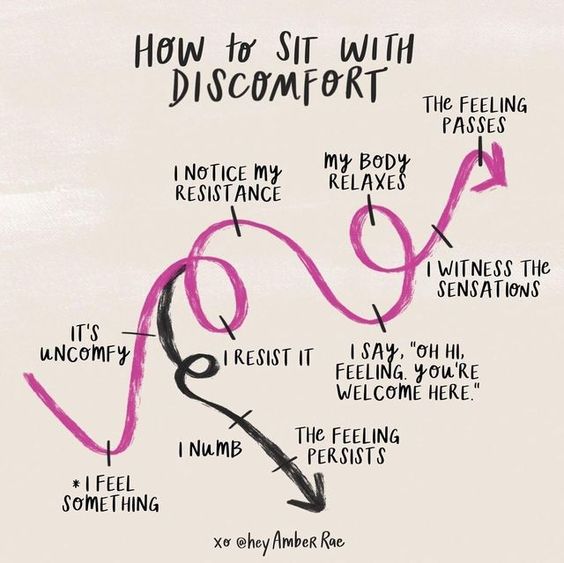
Finally, we found a guided meditation for you to practice sitting with your emotions. The meditation follows the 4 steps:
- Turn towards your emotions with acceptance
- Identify and label the emotion
- Acknowledge and accept your emotions
- Realize the impermanence of your emotions
News of the Week
Sign up for our newsletter to be the first to know about upcoming events and special deals!
The Thought of the Week
Wishing you a peaceful week!