
The Idea of the Week
Creating a healthy relationship with social media starts with a few reminders. NPR’s article (a 5-minute read with a 23-minute listening option) shares 4 reminders to rethink your relationship with social media. The reminders are summarized here:
- Social media is designed to be addictive.
- Your relationship with social media is real. Treat it that way.
- Be an active participant in your relationship.
- Take a break and “detox” as needed.
The article also highlights 3 questions that can help you mindfully define your relationship with social media. Take a moment to breathe and ask yourself:
- What does a healthy relationship look like to me?
- What needs am I trying to meet right now?
- Scan your body. How do you feel after an hour online? Is it too much time?
Practice of the Week
This week, we encourage you to build a healthy relationship with social media.
This 10-minute video shares 7 practical tips and mindsets for creating a healthier relationship with social media:
- Turn notifications off, or tune out the notifications you don’t need. (Go to Settings > Notifications, then tune each app’s notifications. Note that you can utilize the Notification Summary option, which bundles non-urgent notifications and delivers a summary at a more convenient time.)
- Bury the app. This means putting the app in a folder, on the last page of your home screen, or in another location where it’s inconvenient to scroll to.
- Reset your home feed by finding one truly uplifting post on your explore page and pressing “like.” Then like the posts that are similar. This tells the algorithm that this is the content you’re looking for and will be more likely to show that content on your home feed.
- Set your intention. Before you open the app, ask yourself, “Why am I opening this app?”
- Set a time limit. You can do this by setting a timer or you can set time limits for apps in the settings (Go to Settings > Screen Time > App Limits > Add Limit, and make sure the App Limit button is on/green!)
- Schedule your social media time as a reward. This can delay the gratification of checking social media right now.
- Delete the app on your phone and check it on your desktop instead.
If you’re someone who works with social media or needs to use social media for work, it can be difficult to fully detox yourself from social media. This 21-minute podcast on Apple Podcasts shares how you can have a healthy relationship with social media when you work in social media (here’s the YouTube version). Even if you don’t use social media for work, you can adjust these tips in a way that works for you! The summary here is adjusted for the average user, but to see the specifics for each tip for social media workers, check out the podcast/video.
- Monitor your usage and screen time.
- Make the right platform decisions. Ask yourself, “Do I really enjoy using this platform? Is there a way I can change something about my interaction on this platform so I have a healthier relationship with this platform? Does this platform truly bring me any positivity?” If it’s a “no” or even a “maybe” for each of these questions, consider removing the platform from your social media consumption. Shift your focus, instead, to the platforms that you do enjoy.
- Set boundaries. Social media can induce feelings of immediacy and urgency; however, there isn’t much on social media that is a true emergency that would require your immediate attention (even though it sure feels like it). Set boundaries for when you’ll respond to messages or emails, when you’ll interact on the platform, or when you’ll consume current news.
- If you’re someone who posts content on social media, make time to create the content you like to create.
- Know your social media triggers. Note the content and people you follow that brings up negative feelings and remove them from your feed.
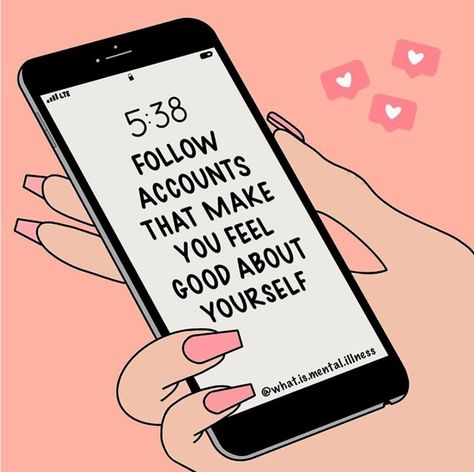
- Curate your experience and make your feed less toxic. Unfollow people and content that you don’t enjoy and focus your feed on the content you do enjoy.
Social media can be toxic, but it doesn’t have to be! What are some of the ways you create a positive, healthy relationship with social media? Let us know over on our social media (links below)!
The Thought of the Week
Wishing you a peaceful week!