Skip to content

The Idea of the Week
Sensory overwhelm during the holidays can make this season challenging, especially for neurodivergent individuals. In this 50-minute video, Taylor from Mom on the Spectrum shares practical strategies to navigate social stress, manage meltdowns, and set boundaries. To make it more digestible, we’ve included the timestamps below so you can jump to the sections that you need most right now.
4:14Goals for this video: a presentation about Holidays on the Autism Spectrum.
5:37Holiday Stress: The holidays are extra stressful for autistic people because of the higher levels of sensory input.
7:12 Discussion Question: What is one aspect of the holidays that is particularly overwhelming or stressful to you?
11:27 Ways to Support Ourselves at Events.
28:43 How to Set Boundaries.
36:34 Identifying Signs of Impending Meltdown.
41:10 Meltdown Survival Guide.
41:49 Big Autistic Resource Guide, a free resource.
The Practice of the Week
In these two short videos (less than 6 minutes each), Neurodivergent Mom Life and Orion Kelly share how the holiday decorations and excitement are overwhelming for neurodivergent families. This 5-minute article also shares 8 Ways to Keep from Feeling Overwhelmed During the Holidays. Below, we’ve compiled several practical tips for managing sensory overwhelm during the holidays:
Tip #1: Adjust the lighting and sound. Opt for soft lights, avoid flashing lights, or take a break from the holiday lights periodically. Avoid competing sounds, such as having the TV running, holiday music in the background, and loud conversations over the music and TV.
Tip #2: Create quiet spaces designated for anyone who needs a break from the noise.
Tip #3: Incorporate sensory-friendly holiday decorations. A fun decoration option is to incorporate their special interest in the activities, decoration, or gifts.
Tip #4: Prepare your family, loved ones, or friends for holiday outings: what to expect, who will be there, the food options, and what kind of activities will be involved. If you’re going to a new place for an outing, try driving by or visiting the place before the event so the place is not “brand new” on the day of the event. Brainstorm coping strategies together.
Tip #5: Limit the number of unfamiliar guests at one time. Too many unfamiliar faces can be a lot to process at one time. You may also try meeting people before the event if you know an event will have many unfamiliar people.
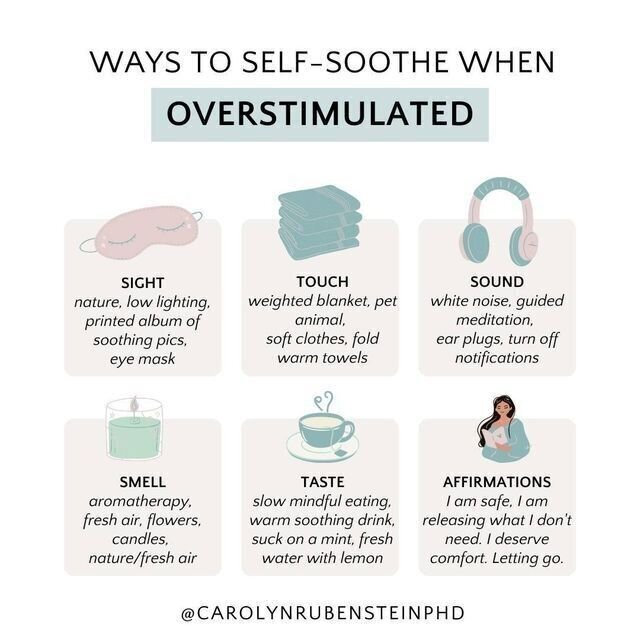
Tip #6: Bring a sensory self-soothing kit to your outings.
Tip #7: Set expectations for taking a break when things feel overwhelming, whether in the home, at an event, or at an outing. Use those quiet spaces from Tip #2.
Tip #8: If needed, set up the time parameters for attending an event or outing. How long can you or your loved ones handle an event before feeling overwhelmed? Set up that time boundary, and don’t feel pressured to stay at an event for the entire time.
Tip #9:Look out for sensory triggers when you are going to a new place, and look out for safe sensory spaces, too. These are the quiet spaces nearby that you can go to when you or your loved one needs a break.
Tip #10:It’s okay to say “no” to events or outings. Be mindful of how much capacity you or your loved ones have to partake in these events.
Tip #11:Use a visual schedule that outlines the activities and events to reduce the overwhelm and anxiety. Include the details of the event, such as the dates, times, locations, who will be there, transportation methods, activities involved, etc. Feel free to use photos to describe the event and activities. Refer back to Tip #4.
News of the Week
Sign up for our newsletter to be the first to know about upcoming events and special deals!
The Thought of the Week
Wishing you a peaceful week!