Skip to content

The Idea of the Week
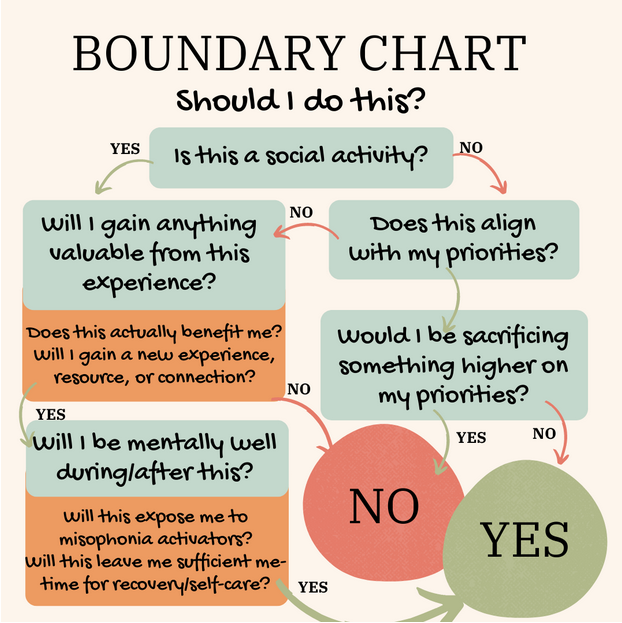
It seems counterintuitive, but boundaries are not about controlling other people’s behavior. Because the truth is, we cannot control other people’s behavior—we can only control our own choices and behaviors.
As Kati Morton shares in her 9-minute video, boundaries include your action plan when someone does not respect your boundaries. Below are Kati Morton’s 3 reminders of what NOT to do when setting boundaries:
- Setting a boundary does not end with the request to the other person to respect the boundary; it includes a plan if they do not respect your request or boundary.
- Boundaries are about controlling our behavior and choices, not the other person’s. When people do not stop or respect your request, that is your chance to implement the boundary.
- Boundaries do not need to be “all or nothing.” A boundary is not just for unhealthy relationships. Boundaries are for every relationship, including personal and work life.
The Practice of the Week
Setting boundaries involves self-awareness, which is your ability to see and understand yourself, your thoughts, your emotions, your behaviors, and your core values and beliefs. Self-awareness involves mindfulness as you are intentionally observing yourself.
This 4-minute article from Positive Psychology shares 5+ ways to become more self-aware. If you don’t know where you should set boundaries, developing your self-awareness is one place to start. Here are 3 ways you can use self-awareness to reflect on boundary-setting:
- Practice “Daily” Reflection: Set aside 5-10 minutes a day to reflect on your experiences. Ask yourself questions like,
- What went well today and what didn’t?
- When did I feel energized or happy, and when did I feel drained or frustrated?
- Were there moments I felt uncomfortable, stressed, or overwhelmed?
- Use a Feelings Journal: Throughout the day, jot down how you’re feeling in different situations. Record what the situation is and focus on your emotional reactions and somatic sensations.
- Tune into Your Body’s Signals: Pay attention to physical cues that arise in stressful or overwhelming situations. Do several body scans throughout the day to tune into what information your body is trying to tell you. Do you notice when you get tense, feel exhausted, have trouble focusing, feel energized, have a clear mind, feel relaxed, etc.?
News of the Week
Sign up for our newsletter to be the first to know about upcoming events and special deals!
The Thought of the Week
Wishing you a peaceful week!