The Idea of the Week
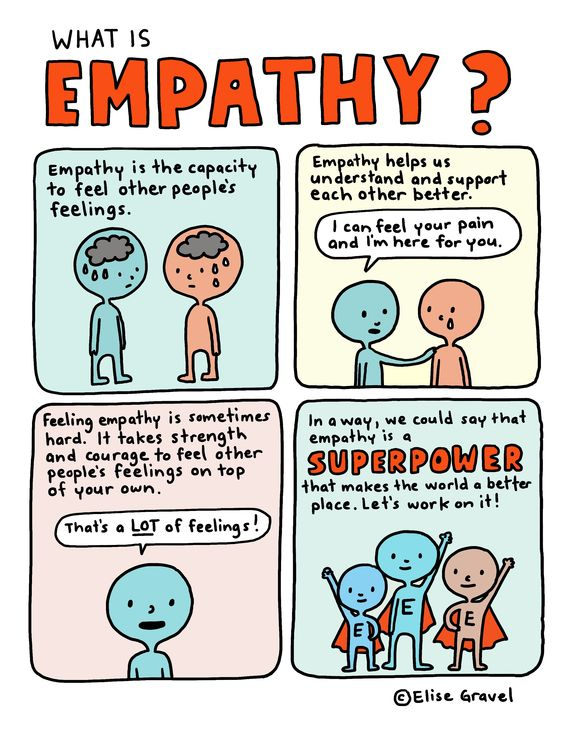
Empathy involves the capacity to understand or feel what another person is feeling. Empathy involves being immersed in another’s struggles; so much so, you may take on their struggles and react to them as if they were your own. Because of this, empathy can take its toll on your well-being (a 7-minute read).
In the spirit of Autism Acceptance Month, let’s take a deeper look at empathy in autism (a 10-minute read). There is often a misconception that autistic people lack empathy, but what appears as a lack of empathy in an autistic person may instead be alexithymia. The article shares the types of empathy, empathy as a spectrum, alexithymia, and examples of how empathy may present in autism. Please remember that autism is a spectrum and presents differently in different individuals, so empathy can present differently between two autistic individuals.
Practice of the Week
If empathy can take a heavy toll on our mental health, then how do we prevent burnout? Tay from Mom on the Spectrum on YouTube shares 5 tips to prevent burnout (13-minute video):
- Take care of yourself in small but impactful ways. Find activities that rejuvenate you and implement them into your day.
- You may need more alone time than others. Take time out of your day to give to yourself.
- Notice subtle mood shifts. The subtle mood shifts may help you recognize when you’re experiencing your own emotions and when you’re carrying someone else’s.
- Ask yourself: Does the emotion I’m experiencing fit my situation? Where could this emotion come from? Is this emotion mine or someone else’s?
- Try naming what you feel out loud or journaling. Do a check-in.
- Use empathy as a tool and set boundaries. You do not owe it to other people to feel what they feel. Instead, during times you can’t offer empathy, try offering compassion (3-minute read).
- Ask yourself: Does this situation require my direct involvement? Do I have the spoons (i.e., energy) to give them empathy?
- If you don’t have the spoons, then communicate that. Tay offers the example, “I see you’re going through a hard time. I would love to be there for you and to give you energy, but I do not currently have the emotional capacity or energy to be there for you like I want to. I would love to check in with you tomorrow or the next day.”
- Be aware that you might take on others’ emotional work. Remember to set your boundaries.
How will you manage empathy and burnout? Share with us on our Instagram or Facebook page!
The Thought of the Week